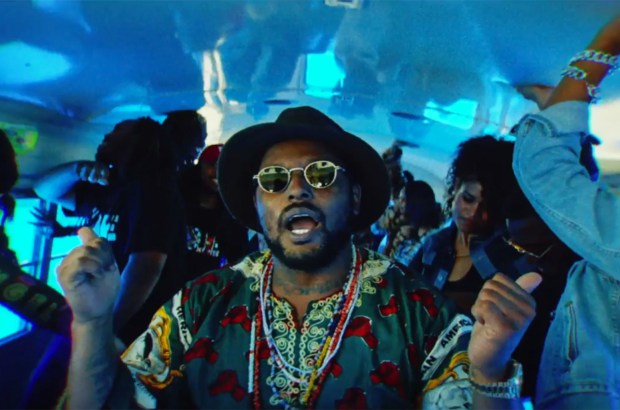
Tonight, ScHoolboy Q dropped his fourth album, Blank Face LP, the latest in a series of albums that showcases the paranoid and twisted mind of one of the most interesting voices in hip hop. Q’s had a tumultuous life that’s always been translated through his music, so before diving into Blank Face, let’s take a second to look back through the life of Groovy Q.
Quincy Matthew Hanley was born on a German military base to parents who had already divorced; the name “Hanley” doesn’t match either of his parents and was supposedly chosen at random. Q’s mother eventually settled down on 51st street in Los Angeles, near the gangland streets of Figueroa and Hoover that would appear so much throughout Q’s music. Despite doing well in school (earning him the nickname “Schoolboy”), Q had joined the 52 Hoover Gangster Crips by the time he was twelve, selling Oxycontin, crack, and marijuana. After being arrested at 21, the rapping that Q indulged in as a pastime began looking more and more like a viable career.
In 2008, Q dropped ScHoolboy Turned Hustla through G.E.D. (the imprint that got Tyga tarted), and a close relationship with local label Top Dawg Entertainment led to him releasing Gangsta & Soul through TDE in 2009. Two years and multiple guest spots on label mates Jay Rock, Ab-Soul, and Kendrick Lamar’s albums later, ScHoolboy released his first album, Setbacks, to critical acclaim. Along with several appearances by his fellow Black Hippy rappers, Setbacks had appearances by Jhene Aiko, BJ The Chicago Kid, Murs, and Big Pooh. While Setbacks had no hit singles, songs like “Druggy Wit Hoes” and “Birds & tHe Beez” would go on to be fan favourites, and the Zombies-sampling “Rolling Stone” is one of the most underrated Black Hippy tracks ever.
In 2012, ScHoolboy’s second album Habits & Contradictions would propel ScHoolboy to much deserved fame, jumping to the iTunes top 10 chart. The A$AP Rocky-assisted single “Hands on the Wheel”, which sampled a live cover of Kid Cudi’s “Pursuit of Happiness” by American singer Lissie, was Q’s first song to chart on Billboard.
Habits refined the dark, murky style that Setbacks was presenting. Songs like “Oxy Music” and “NigHtmare On Figg St.” detailed Q’s adolescence in alarming detail, translating the fear and constant threat of violence that populated LA’s streets. The first five seconds of Habits sets you up for the rest of the album, inspiring a trippy, claustrophobic sense of dread that permeates everything Q’s ever made. Featuring beats from more high-profile producers like Mike WiLL Made It, the Alchemist, and Lex Luger and verses from popular West Coast artists Curren$y and Dom Kennedy, Habits remains possibly Q’s best release to date. The album finds its highlight in the Kendrick-assisted “Blessed”, which finds Q trying to appreciate the things he has in the face of what others don’t before Kendrick steps on to destroy the beat.
Oxymoron, ScHoolboy’s followup to Habits, finds the rapper at his darkest. The opening track, “Gangsta”, is a disonant ode to Gangster life; the Tyler the Creator and Raekwon-assisted “The Purge” showcases all three rappers’ penchant for potraying the very darkest of topics; and the seven minute “Oxymoron/Prescription” imagines a direction Q’s life could’ve taken that ends with his daughter finding his overdosed body. Oxymoron was also the source of Q’s biggest hits: “Studio”, his track with BJ The Chicago Kid, is Q’s highest charting song ever, but it’s “Collard Greens” and “Man of the Year” that continue to get blasted at every single party. Q recruited everyone from Pharrell to 2 Chainz to help with a menacingly dark album that finds Q at his most personal.
ScHoolboy Q isn’t a man overcome with his vices and issues: he’s a man who’s accepted them, been shaped by them, and worked with them to become who he is. There are many themes and ideas that follow Q throughout his album: he capitalises the H’s in every song title as an homage to Hoover Street; songs like “Druggy Wit Hoes” and “Tookie Knows” have had sequels across albums, but the main thing that Q never forgets to work into his music is his daughter, Joyce Hanely. Appearing in several of his music videos, on the cover of Oxymoron, and speaking throughout the album, the daughter Q almost left music for permeates everything he does.
TDE seems to have a fairly simple formula for how it picks its artists: everyone on the label puts every part of themselves into their music. Ab-Soul throws his paranoia and obsessive search for awareness into his lyrics, Jay Rock evokes every second he spent on the streets, Isaiah Rashad speaks frankly on every issue and anxiety that’s affected him, SZA throws her soul into every note, and Kendrick manages to take everything that’s affected him, and everything he’s going to do about it, into his carefully arranged masterpieces. ScHoolboy doesn’t try to hide the fact that he spent his childhood gangbanging and stealing. In stead, he embraces it, putting his hometown, his street, his family and friends on in every song. He remains the most sexually explicit member of Black Hippy simply because he refuses to censor anything. TDE is making the most honest music out there, and ScHoolboy is a major part of that.
Expectations are high for Blank Face, and you can expect an album review soon, but if early singles “Groovy Tony”, “THat Part”, “By Any Means”, and “Tookie Knows II” are any indication, ScHoolboy’s still at top form and fans will be treated to more honest street raps from rap’s most consistent wild card.
 Audio Plug