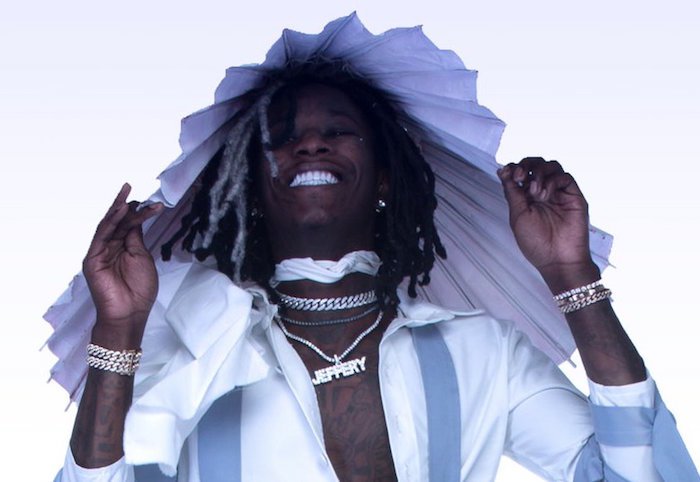
When 300 Entertainment label boss Lyor Cohen announced that Young Thug was changing his name, the rap internet went into an uproar.
“Young Thug” is simple, concise, a two-syllable name that perfectly encapsulated the 25-year-old Atlanta native who never left the house without an AR-15, whose style and mixtape output matched golden era Lil Wayne. But the Gucci-worshipping artist who spent three mixtapes coming up from nothing is not the same man who released one of August’s most anticipated albums.
“No, My Name is Jeffery” is a mouthful, but it’s a statement. As shown in his trailer for the new mixtape (shown below), there’s an identity crisis that comes with being known more by your rap moniker than the name on your birth certificate. Jay Electronica may not agree, but for many, your birth name is an integral part of you. As the man born Jeffery Lamar Williams stated in a Q&A for his album release, “I ain’t want my kids to grow up and call me Thug”.
https://www.instagram.com/p/BJbnzP9hqxf/?taken-by=thuggerthugger1&hl=en
DJ Booth recently did an excellent article detailing Thug’s physical transitions, from mustard-coloured hair and Hooters tank tops to jet-black dreads and designer clothing. Jeffery’s recent Calvin Klein deal isn’t just because he’s a famous rapper: he’s one of the most stylish men in the industry.
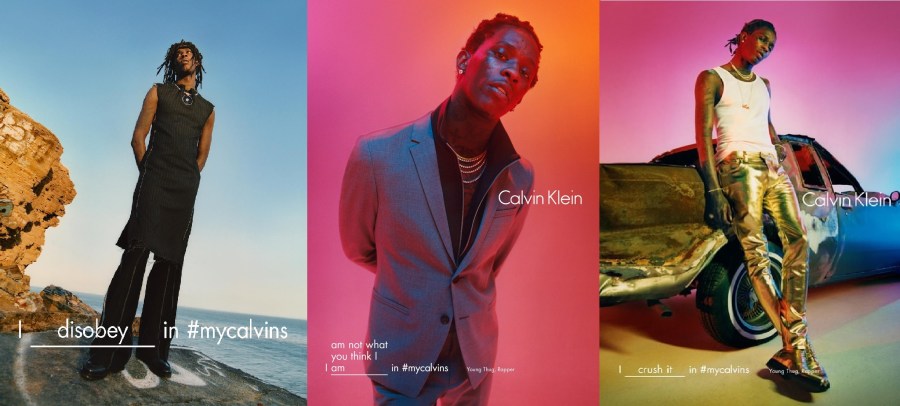
Jeffery’s never been one to fit into molds, and he’s fought any attempt to be marginalized. The part of this that’s brought the most negative publicity is his proclivity for women’s clothing: from the Uggs and skinny jeans focused on in the oft-referenced GQ article to the tutu he wore for a Dazed photoshoot, he’s never been afraid to wear whatever he’s comfortable in. In the same way he responded to claims that he was ripping off Lil Wayne’s style by releasing an album called Barter 6 (a dig at Wayne’s unreleased Carter 5 album), Jeffery responded to allegations of cross-dressing and homosexuality by donning a designer dress for the cover of No, My Name is Jeffery. It’s a bold move, that been responded to by the inevitable homophobia that permeates rap culture, but it’s everything we’ve come to expect from Jeffery, and his boldness has attracted some impressive comparisons:
Jeffery’s transition isn’t just aesthetic, however: No, My Name is Jeffery represents a subtle yet significant change in the artist’s sound. He’s wearing his influences on his sleeve with the tracklist, namedropping everyone from Kanye to Rihanna to Webbie in his list of idols, but the artist who seems to have had the most impact on the album’s sound is Wyclef Jean, who’s named on the intro and featured on the outro. Wyclef is often outshined by his former Fugees bandmate Lauryn Hill, but his fusion of R&B and hip hop has had an indelible effect on the industry. From the “Wyclef Jean” to “Harambe”, reggae is resplendent on Jeffery. Young Thug’s past work with dancehall artists has been some of his best:
No, My Name is Jeffery still sounds like Young Thug, and there’s no reason for old fans to be disappointed with it, but the artist has come a long way from “Danny Glover” and “Stoner“. Maybe it’s hanging out with Kanye and Chance, maybe it’s the simple fact that the media has stopped trying to paint him into a corner and now he has the chance to take his music where he wants, but Jeffery’s branching out and progressing with each release. In the same way Future evolved to a completely new level without sacrificing his sound on 2014’s Monster, Jeffery is working within the Atlanta trap sound that made him famous to prove that he’s so much more than turn-up rap. He’s one of the smartest musicians going.
 Audio Plug